
Overview
This article compares Google Ads vs Google Local Services Ads (LSAs) to help business decision makers evaluate which channel aligns with their goals. It summarizes how each channel charges, where ads appear, basic eligibility and verification differences, and practical steps to test both without forcing an either-or choice.
How the channels differ at a glance
Cost model
Local Services Ads use a pay-per-lead model: businesses are charged for qualified leads such as calls, messages, or booked appointments.
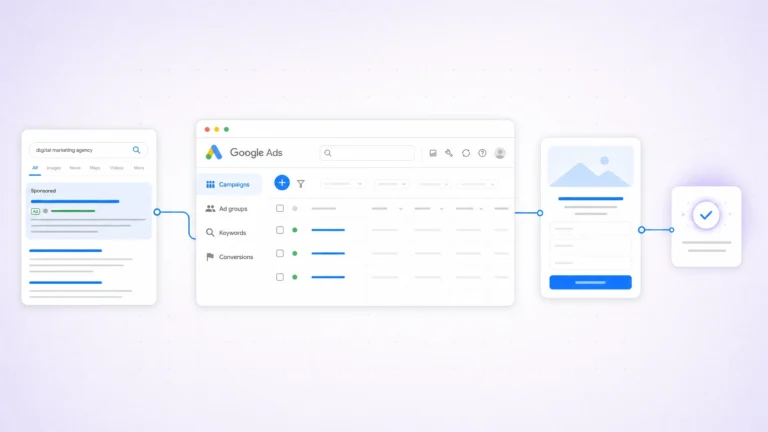
Google Ads typically operates through ad auctions and cost-per-click bidding (CPC) or automated bidding strategies, where you pay for clicks or other events rather than individual leads. Advertisers set budgets and bidding approaches to compete in real-time auctions.
Placement and visibility
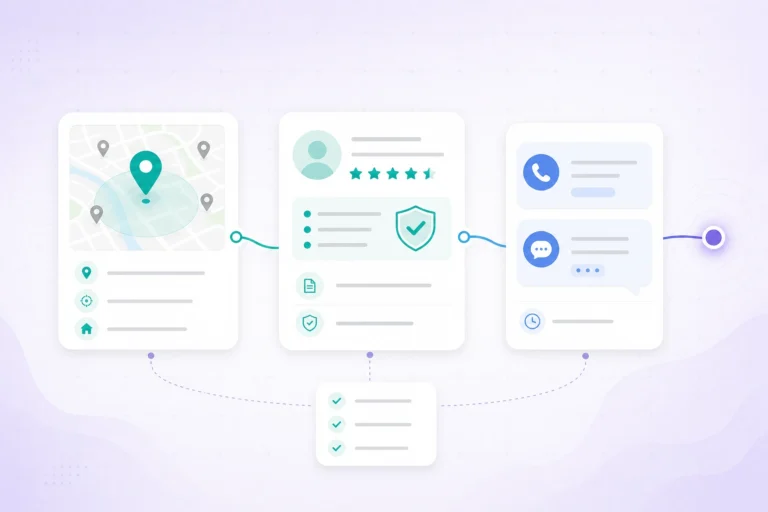
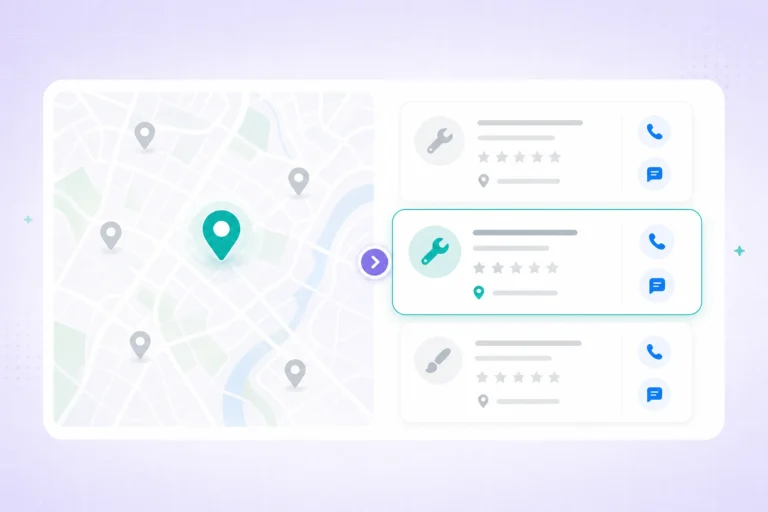
LSAs appear prominently at the top of Google Search and Google Maps for relevant local service queries and can include trust signals such as a Google Guaranteed or Google Screened badge after verification.
Google Ads placements are more flexible and can include search results, display, video, shopping, and other inventory across Google’s networks. Placement and prominence are influenced by bids, quality, and campaign settings.
Eligibility and on-boarding
Local Services Ads are available only to selected service categories and geographic areas, and generally includes background, license, insurance, and business-verification checks. Availability and exact requirements vary by location and service type.
Recent platform developments to consider
Google has been integrating pay-per-lead functionality into its broader Google Ads environment through pay-per-lead goals and Performance Max workflows, which may affect how LSA-style experiences are managed in the future. If platform consolidation matters for your team, treat this as a factor when planning long-term channel strategy.
Which channel tends to fit which business needs
Rather than presenting a strict either-or, match channel characteristics to your immediate priorities:
- Choose or test LSAs first if you sell local, on-site services in an eligible category, prefer a pay-for-lead cost model, and want the additional verification badge that can increase trust during search. Be prepared for on-boarding checks and leads routed directly through Google’s lead flow.
- Choose or test Google Ads first if you need broader reach, want control over keywords and creatives, plan to run promotions or non-service campaigns (display, video, shopping), or prefer campaign-level control over bids, audiences, and landing pages.
How to test both channels without overspending
- Define success metrics: decide whether you measure calls booked, qualified lead rate, cost per lead, or downstream revenue contribution.
- Run concurrent small tests: allocate a finite budget and run an LSA campaign (if eligible) and a targeted Google Ads search campaign for the same core services and service area for a short period.
- Track lead attribution and quality: log which leads came from each channel, confirm lead intent, and track conversion or booking rates rather than raw counts.
- Compare unit economics and follow-up effort: compare average cost per qualified lead and the internal cost to follow up on leads from each source.
- Iterate: scale the channel that produces the best balance of lead quality and economics, or use both channels for different buyer intents (e.g., LSAs for immediate service calls, Google Ads for education and longer-funnel offers).
Practical considerations and common pitfalls
- Do not assume lead volume = quality. Measure booking and conversion rates to understand real value.
- Review on-boarding requirements for LSAs early; verification can take time and some categories are not eligible.
- Use tracking and call verification tools so you can attribute leads accurately to each channel.
- Expect some seasonal and geographic variation; results in one city or month may not generalize.
Next steps
If you want a practical next step, create a short experiment plan that defines metrics, a test budget, and a timeline for both an LSA test (if you are eligible) and a focused Google Ads search campaign. Compare results after the test window and decide whether to scale, pause, or refine each channel.
Learn more on our Paid Advertising page for support options tailored to service businesses.
FAQ
What are the main differences between Local Services Ads and Google Ads in terms of cost model, placement, and eligibility?
Google Ads vs. Local Services Ads: Key Differences
Local Services Ads use a pay-per-lead model, charging for qualified leads such as calls, messages, or booked appointments. Google Ads typically uses an auction-based system with cost-per-click bidding or automated strategies, charging for clicks or other events.
Moreover, LSAs appear at the top of Google Search and Maps with trust signals after verification. In this context, Google Ads vs. Local Services Ads differs in eligibility and scope, and on-boarding requires background checks.
How do placement and trust signals differ between LSAs and Google Ads?
Google Ads vs. Local Services Ads
LSAs appear prominently at the top of Google Search and Google Maps for local service queries. Additionally, they may include trust signals such as a Google Guaranteed or Google Screened badge after verification. Google Ads placements are varied and can appear across search results, display, video, shopping, and other networks.
What should a business consider when deciding between testing LSAs first versus Google Ads first?
If you offer local, on-site services in an eligible category, test Google Ads vs. Local Services Ads. Prefer a pay-for-lead model and note on-boarding checks and leads routed through Google’s lead flow. Additionally, verify eligibility and on-boarding steps in your region.
Alternatively, choose Google Ads first if you need broader reach and control over keywords. Moreover, it lets you manage campaigns, creatives, promotions, bids, audiences, and landing pages. If broader reach remains a priority, prioritize Google Ads first. Always align with your measurement strategy for success.
How can a business test both channels without overspending?
Define success metrics such as calls booked, qualified lead rate, cost per lead, or downstream revenue.
Additionally, run concurrent tests by budgeting a small amount for an LSA campaign (if eligible) and a Google Ads search campaign.
Moreover, track attribution and lead quality, compare unit economics and follow-up effort, and iterate by scaling the best channel.
What practical pitfalls should businesses watch for when using LSAs and Google Ads?
Do not assume lead volume equals quality; measure booking and conversion rates.
Additionally, review on-boarding requirements for LSAs early since verification can take time and some categories are not eligible.
Use tracking and call verification tools to attribute leads accurately.
Be aware of seasonal and geographic variation, which may affect results and generalizability.